The biggest Instagram hashtags aren't automatically the best ones. A tag used by millions of posts may describe your topic, but it also puts your content in a crowded stream where broad relevance matters less than a clear match between the post and the people who might care. The strongest set depends on your niche, the post's purpose, your audience, its format, and what has worked for your account.
Treat hashtags as a dynamic matching system, not a permanent block to paste under every caption. Start with a core tag that accurately names your subject. Add a few mid-size discovery tags, then include niche terms that signal the specific audience or intent. For a video about turning one long interview into short clips, that could mean a content-creation tag, a repurposing tag, and a term for the editing technique.
Then test combinations against meaningful outcomes. A hashtag count by itself doesn't tell you whether the post reached the right people, prompted profile visits, or earned saves and follows. Research summarized by Frameos Studio points to a useful caution: results vary, and hashtag volume alone isn't a dependable performance lever. Start with the packs below, adapt them to the actual post, and keep the tags that attract relevant attention.
1. Solopreneur and Small Business Hashtag Set
Small-business hashtags work best when they identify both the maker and the work. A consultant sharing lessons from a client project has a different audience from a shop owner filming a product being made. Start with a clear business tag, then add tags for the founder experience, product category, or customer problem.
Copy-ready core: #smallbusiness #solopreneur #buildinpublic #smallbusinessowner #entrepreneurlife
Use #buildinpublic for progress updates, launches, lessons, or setbacks. It's a poor fit for a polished product photo with no story about how the business is being built. A one-person Etsy shop might pair #smallbusiness and #smallbusinessowner with a specific craft tag, while a consultant could use #solopreneur and a service-specific term.
Practical rule: Keep the broad tag, but make the other tags describe the post, not just the person who published it.
For a product-making time-lapse, use the product type and technique as niche tags. For a weekly client win, use founder and service descriptors that reflect the update. Try a few relevant tags rather than pasting the same block on every post, and check Instagram's current per-post limit in your account settings because platform limits can change.
For more ideas on broad tags and how they're commonly used, browse popular Instagram hashtag examples. Treat them as a starting point, then narrow the set to your actual offer and audience. Track profile visits and follows alongside reach so a burst of general attention doesn't get mistaken for business interest.

2. Content Creator and Content Marketing Hashtag Set
For advice-led posts, tag the subject and the intended audience. A creator explaining a distribution workflow wants to reach people who make content, while a social media manager sharing a calendar template may want marketers looking for a usable process. Broad creator tags can provide context, but niche terms make the topic more precise.
Copy-ready core: #contentcreator #contentstrategy #socialmediamarketing #creatortips #repurposecontent
A carousel titled “How I turn one YouTube video into a week of posts” can lead with #contentcreator and #contentstrategy, then use #repurposecontent to describe the specific workflow. A posting schedule template may fit #socialmediamarketing and #creatortips. Don't use every term in the pack automatically. Keep the tags that accurately match the lesson.
Match the tag to the promise
Make the first slide state a practical result, such as a workflow, template, or decision the reader can use. The hashtags help classify the subject; the content itself needs to deliver the promised value. A clear caption call to action can invite readers to save the carousel or visit your profile, while a pile of tags can't make an unfocused post useful.
Use broad tags sparingly and keep the rest specific. Then check Instagram Insights for profile visits and other qualified actions associated with posts using each combination. Compare similar educational posts rather than drawing a conclusion from one outlier. If you're building an audience with practical content, this guide to reaching your first Instagram followers can complement the hashtag approach.
3. Video Creation and Filmmaking Hashtag Set
A video tag should name what viewers will see. A color-grading demonstration, a gear review, and a behind-the-scenes shoot do not belong under an identical hashtag block just because all are video content. Use one broad creator or film term for context, then choose specific tags for the technique, role, or production stage.
Copy-ready core: #filmmaker #videoeditor #cinematography #behindthescenes #filmediting
A Reel showing a color-grading process could pair #videoeditor with #cinematography and #colorgrading. A set-day clip could use #filmmaker and #behindthescenes, plus the production specialty if it's relevant. For editing tutorials, name the workflow or technique rather than adding a generic video tag that says little about the clip.
Your tags should describe the clip a viewer sees, not the entire career you hope to build.
For short-form video, make the opening visually clear and put the subject in on-screen text or the caption as well as the tags. That helps viewers understand the clip without relying on a hashtag to explain it. If you're repurposing a longer YouTube video, give each vertical excerpt its own topic-specific set instead of repeating the source video's broad tags.
Rotate around a stable group of accurate terms, not a random collection. Review which clips lead to profile visits, saves, or follows, and keep the topic and format comparable when judging a change. For more practical publishing guidance, see social media posting best practices.
4. Photography Hashtag Set
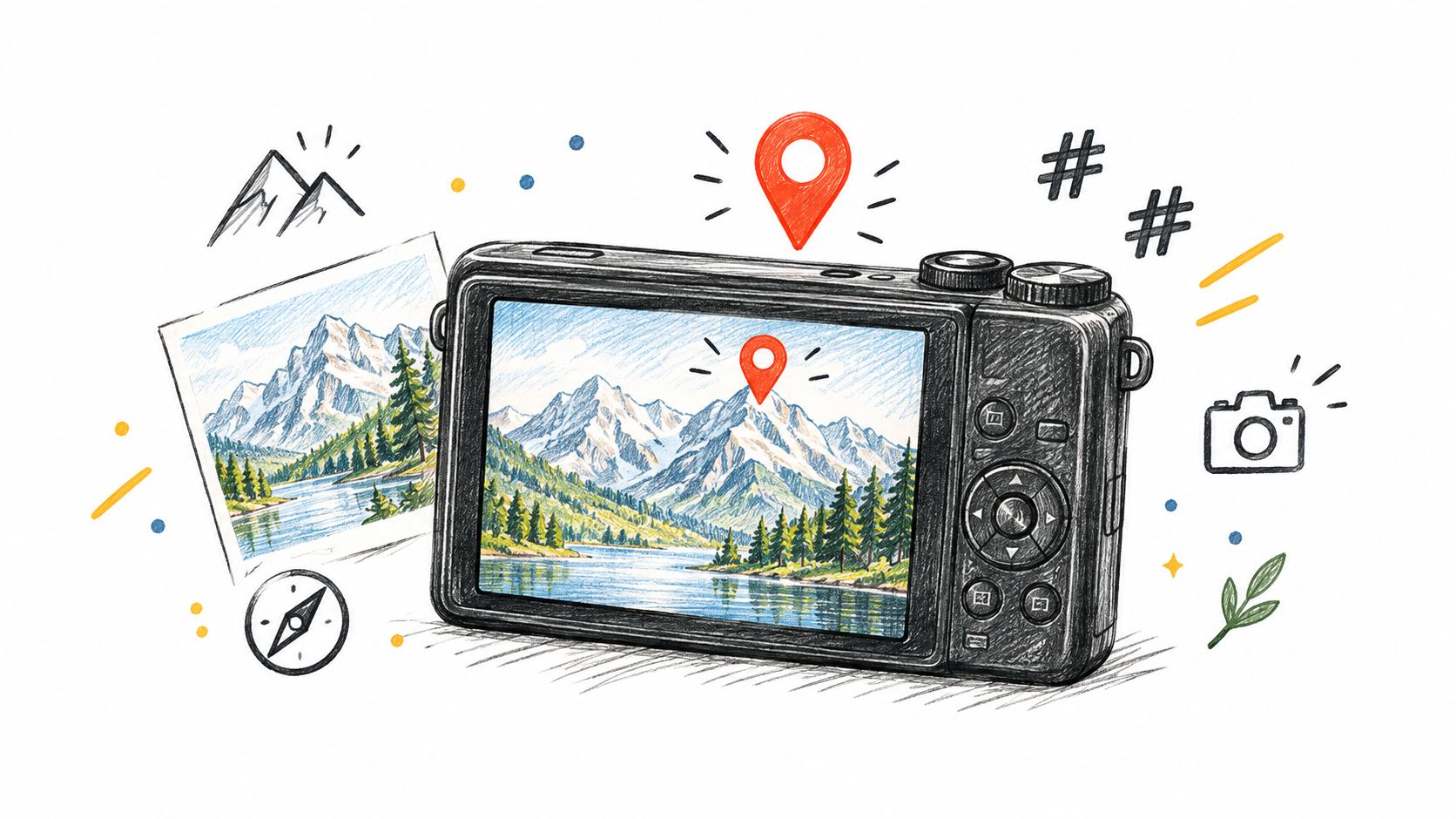
Photography is too broad for a single useful hashtag pack. Choose tags by genre first, then add a device or community tag only when it truthfully describes the image. A nature scene, portrait, street scene, and mobile photo each need different descriptors, even if the same photographer published them.
Copy-ready core: #photography #streetphotography #scenicshottography #portraitphotography #mobilephotography
A street photographer might use #streetphotography with a city or neighborhood tag. A nature photographer should name the environment or subject, such as a coastline or mountain scene, rather than relying on a general photography label alone. Keep broad tags limited and let the more specific descriptors do the audience-matching work.
Use device and location tags honestly
Tags such as #ShotoniPhone or #ShotOnGoPro can make sense when the named device captured the image. Don't add a device tag for reach if it misrepresents the work. A post location can add useful context, especially when the scene is tied to a recognizable place, client, or travel destination.
Look at your photo and ask what a stranger would search for: the genre, subject, place, or technique. Then select a small set that answers that question. If the image is a portrait taken on a phone, combine the portrait descriptor with a truthful device tag and a relevant location. If the photo is a seascape, replace those terms with the scene and region.
Use Instagram Insights to review which combinations bring relevant profile activity. A high impression count isn't enough if the people arriving aren't interested in your photography or services. Keep a core set for each recurring genre, then add a few image-specific tags instead of copying one fixed list across every post.
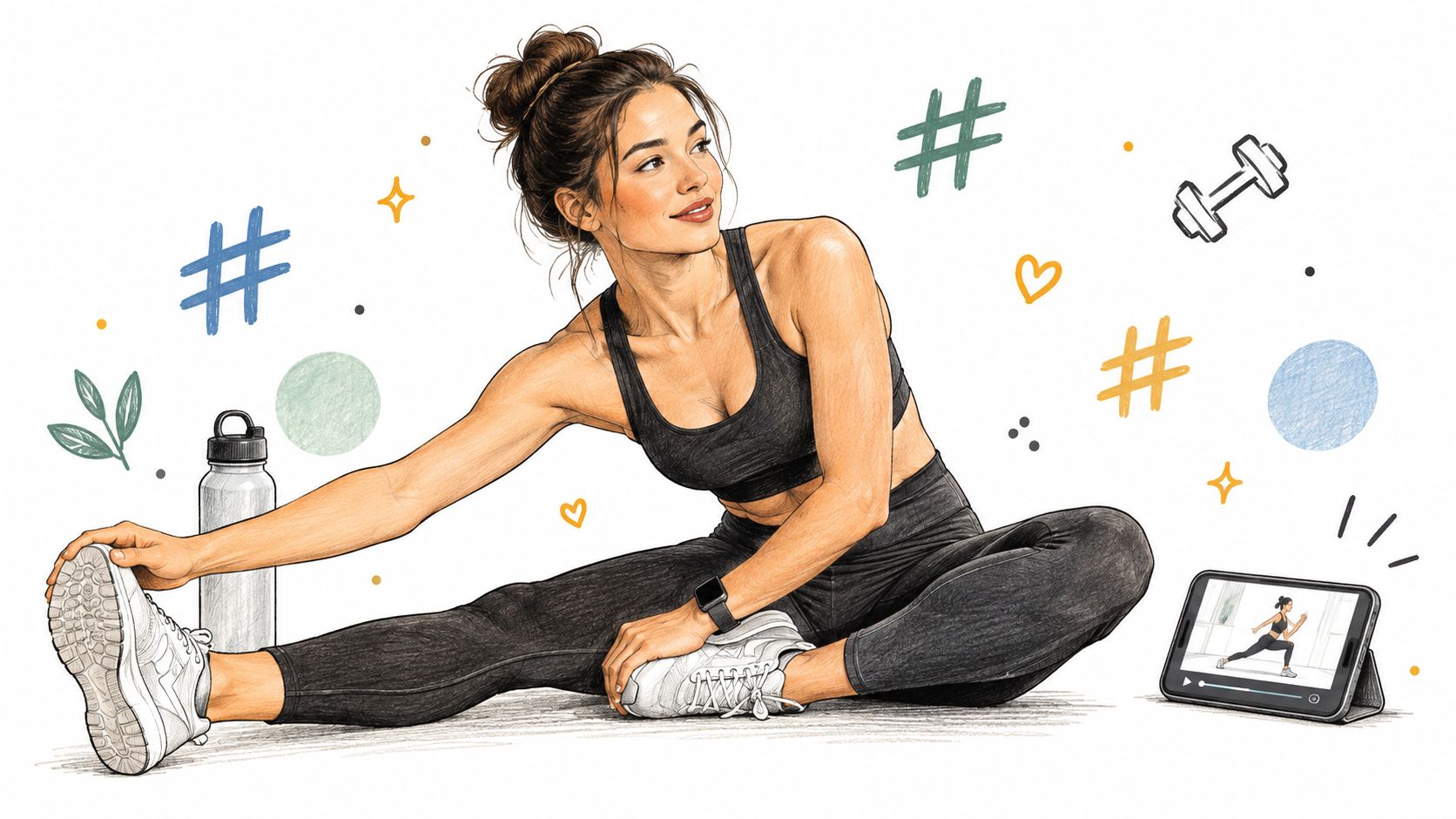
5. Fitness and Wellness Hashtag Set
A fitness hashtag pack should match the post's purpose, not chase a broad reach label. A form-correction Reel, a strength routine, and a recovery tip speak to different viewers. Choose tags for the training style, movement, or wellness topic, then adjust the pack to the format.
Copy-ready core: #strengthtraining #workoutmotivation #healthyliving #wellness #fitnesscoach
For a form-correction Reel, pair #strengthtraining with the movement being taught. A weekly routine can use #fitnesscoach alongside a tag that names its training focus. Keep the set narrow when the post teaches one technique. A carousel explaining mobility may need a different mix from a Reel demonstrating an exercise.
Use recurring formats, such as a weekly workout or mobility lesson, to build a recognizable series. Put the main instruction on screen and in the caption so viewers can follow it without relying on hashtags. Keep health claims responsible: don't promise a routine will guarantee results or use tags that imply unsupported medical outcomes.
Choose the pack by post intent:
- Training demonstration: Pair a training-style tag with the specific movement or skill.
- Routine or coaching advice: Use coach and routine descriptors that match the audience.
- Recovery or general wellness: Name the topic accurately. Don't imply treatment or diagnosis.
Test packs against the action each format is meant to prompt. Compare saves on tutorial Reels with comments on form-check posts. A saved routine signals different intent from a question about technique, so judge each pack against the post's purpose. If a precise movement tag brings relevant technique questions, keep it for form tutorials; don't assume it will suit every workout. Change a few tags at a time and compare similar posts, since the instruction and presentation also affect responses.
6. Food and Recipe Hashtag Set
Food hashtags should identify the dish, cooking style, and reason someone might want the post. #food is too broad to explain whether you're sharing weeknight cooking, meal prep, a restaurant special, or a recipe for a specific diet. Choose the terms that match both the ingredients and the viewer's intent.
Copy-ready core: #homecooking #easyrecipes #mealprepideas #vegetarianrecipes #foodphotography
A home cook sharing a simple weeknight dish could use #easyrecipes and #homecooking, then add the recipe style or main ingredient. A restaurant posting a daily special should include a local location tag and use food photography or cuisine terms only when they fit the post. Avoid using dietary tags that don't accurately describe the recipe.
Make the post worth saving
For a recipe carousel, put the dish name and key ingredients where viewers can quickly understand what they'll make. Use the caption for the method, substitutions, or serving context. A good tag set can help categorize the recipe, but useful presentation gives someone a reason to save it or share it.
A cooking video can become a Reel, a step-by-step carousel, and a written recipe caption. Give each version tags that reflect its format and emphasis. For example, a Reel focused on knife technique needs different descriptors from a carousel focused on meal prep. Avoid duplicating a broad pack just because the content originated from the same cooking session.
Use Insights to compare saves and profile visits across recipes with similar intent. If a meal-prep post attracts the right audience, retain the relevant meal-prep terms for future recipes, but adjust the ingredient and cuisine tags each time. The recipe video example can also help spark ideas for presenting food content in video form.
7. Travel and Adventure Hashtag Set
Travel tags work best when they combine the type of experience with the destination. A city guide, a trail clip, and a resort review have different audiences. Add the place people might search for, then use a smaller set of terms describing the guide, activity, or style of travel.
Copy-ready core: #travelblogger #travelguide #exploremore #adventuretravel #destinationphotography
For a weekend itinerary in Lisbon, pair travel-guide terms with a city-specific hashtag that accurately identifies the destination. A Reel of a viewpoint could use an adventure or destination descriptor, but the location tag should name where the footage was made. Don't use a famous destination tag just because it's popular if the post doesn't feature that place.
A carousel can make an itinerary easier to save: show the route, practical stops, and details a traveler can use. Use the post's location feature as well as relevant caption tags when location adds genuine context. For a nature trip, narrow the set to the region, activity, and scenery rather than defaulting to generic travel terms.
Pack by intent, not just by destination:
- Trip planning: Use guide, itinerary, and destination terms.
- Outdoor adventure: Name the activity and environment.
- Travel photography: Focus on the scene, location, and photographic genre.
If a trip is sponsored, disclose that clearly in the caption. Then assess saves, shares, and profile visits, not only impressions. A guide may be useful to future travelers even if it doesn't produce the same immediate response as a dramatic scenic Reel.
8. Fashion and Style Hashtag Set
Fashion tags need to describe the look or styling idea, not merely announce that an outfit exists. A capsule-wardrobe lesson, a vintage haul, and a formalwear look have distinct audiences. Replace #ootd with terms that point to the style, garment, or shopping approach in the post.
Copy-ready core: #styleinspo #minimalstyle #vintagefashion #thriftfinds #personalstyle
A carousel showing several ways to wear one jacket could use #styleinspo and #minimalstyle if those terms fit the looks. A thrift haul could pair #vintagefashion with #thriftfinds, then add a more specific descriptor for the garment or era when relevant. Don't use a vintage tag for new clothing just because the outfit looks retro.
Show the styling, not just the label
Use a carousel to show different combinations, details, or fit variations. The tags can help classify the aesthetic, but the images should make the styling advice clear. A consistent visual approach can make posts recognizable without forcing identical captions or hashtags on every outfit.
For shopping content, choose tags based on the item and how the audience might search for it. A styling lesson about layering deserves different terms from a product review. If a post includes affiliate links or a paid partnership, disclose that in the caption rather than relying on a hashtag to communicate the relationship.
Review saves and profile visits when testing changes. A specific style tag may draw fewer casual viewers but more people interested in the look you create. Keep a small core for your recurring aesthetic, then adapt the remaining tags to the outfit, season, and post purpose.
9. Beauty and Skincare Hashtag Set
Beauty content spans tutorials, product comparisons, makeup artistry, and skincare routines. Tag the specific task or product category rather than using a broad beauty block on every post. Ingredient tags can help clarify what a review discusses, but only use them when that ingredient is part of the content.
Copy-ready core: #beautytips #beautycommunity #makeupartist #skincareroutine #makeuptutorial
A routine Reel could use #skincareroutine and add a tag for the ingredient or skin-care step being discussed. A makeup artist showing a technique could use #makeupartist and #makeuptutorial, with a more specific tag for the look or tool. A product comparison should identify the category clearly instead of implying that one item works for everyone.
Avoid medical claims, guaranteed outcomes, or tags that promise a result the post can't substantiate. If you show a before-and-after, use clear lighting and disclose relevant context so viewers can judge the comparison fairly. For a long review, create shorter clips focused on one product or one decision, and give each clip its own relevant tags.
Keep the claim and the hashtag equally accurate. A precise product or ingredient tag is useful; a promise of guaranteed results can mislead the audience.
Compare profile visits, saves, and comments across similar tutorials or reviews. If a routine post attracts questions about a specific step, use that topic to shape a follow-up rather than repeating a generic tag list. The aim is to connect the right beauty audience with the actual content.
10. Tech, AI, and Productivity Hashtag Set
Tech tags can become vague quickly. A post about a particular automation, writing tool, or focus routine should name the workflow as well as the category. Use a broad productivity or tech term for context, then add tags that reflect what the audience will learn or see.
Copy-ready core: #productivity #techtips #aitools #workfromhome #buildinpublic
A Reel demonstrating an automation should use tags for productivity and the workflow, with the tool's name in the caption. A carousel comparing writing tools can use #aitools if that accurately describes the products, while the caption explains what's being compared and for whom. A remote-work routine might be better served by #workfromhome plus a specific organization or focus term than by a broad AI tag.
Show the workflow and its result
Name the tool, show the steps, and explain the practical outcome without making unsupported claims. If you built a product or are sharing progress, #buildinpublic can make sense; it's less useful for a generic software roundup with no building story. Refresh the set as your subject changes, but don't chase new terminology that doesn't describe the post.
Use a stable core for recurring themes and rotate specific tags by tool, task, and audience. Compare posts with similar formats and topics in Insights, paying attention to profile visits, saves, and clicks where available. If the post's purpose is to teach an automation, the clearest tags are the ones that accurately describe that automation and the person who would want to use it.
Best Instagram Hashtag Sets: 10-Point Comparison
| Hashtag Set | 🔄 Implementation Complexity | ⚡ Resource Requirements | 📊 Expected Outcomes | ⭐ Ideal Use Cases & Key Advantages |
|---|---|---|---|---|
| Solopreneur & Small Business | Low; combine broad, mid-size, and niche tags | Low; basic product or founder content | Peer engagement, potential collaborators, and early-customer discovery | Milestones, launches, and founder stories; reaches a supportive business community |
| Content Creator & Content Marketing | Low; pair broad tags with focused topic tags | Low to moderate; educational posts or carousels | Profile visits, saves, and reach among creators and marketers | How-to posts, workflows, and tool comparisons; aligns with productivity-minded audiences |
| Video Creation & Filmmaking | Moderate; select tags that match each video's technique | Moderate to high; video production and editing | Discovery among video creators, potential collaborators, and clients | Reels, editing tutorials, and behind-the-scenes clips; suits a video-focused community |
| Photography | Low; add genre and relevant location tags | Moderate; photography and visual editing | Engagement from photography enthusiasts and potential clients | Genre-specific images and device-shot campaigns; benefits from Instagram's visual focus |
| Fitness & Wellness | Low; combine general tags with training-specific tags | Moderate; workout demonstrations or routine content | Strong engagement and potential coaching or product interest | Workouts, form tips, and progress stories; short videos are easy to produce |
| Food & Recipe | Low to moderate; use recipe-specific and cuisine tags | Moderate to high; food preparation and photography | Saves, shares, and potential cookbook or brand interest | Recipes, cooking demonstrations, and restaurant specials; useful content encourages saves |
| Travel & Adventure | Moderate; add destination and location tags | High; travel, planning, and content production | Saves, shares, and potential travel partnerships | Itineraries, destination guides, and adventure clips; location tags improve relevance |
| Fashion & Style | Low; choose style-specific tags and disclose promotions | Moderate to high; styling and consistent visuals | Shares, product interest, and partnership opportunities | Outfit carousels, styling tips, and shopping finds; supports visual discovery |
| Beauty & Skincare | Moderate; use product or ingredient-specific tags carefully | Moderate to high; tutorials, products, and good lighting | Saves, shares, and potential purchase or affiliate interest | Routines, reviews, and tutorials; strong fit for purchase-intent audiences |
| Tech, AI & Productivity | Low to moderate; refresh tags as tools and trends change | Low to moderate; screen recordings or workflow demonstrations | Tool discovery and interest from solution-seeking audiences | Tutorials, comparisons, and workflow tips; reaches people looking for practical tools |
Build a Repeatable Hashtag Testing System
There isn't a reliable universal number of Instagram hashtags that works for every account and format. One comparison summarized by HubSpot's Instagram hashtag guidance reports that marketers commonly use a handful of tags, while relatively few use every available slot. Its discussion also describes mid-size tags as potential engagement environments. Treat that as a starting point for testing, not a guarantee: a hashtag's post count doesn't prove that it will bring the right audience to your account.
Research summaries don't point to one universal winner, either. Later's analysis of hashtag quantity notes that studies reach different conclusions about reach and engagement, in part because the populations and formats they examine differ. That's why your own comparison should separate Reels from feed posts and reach from meaningful actions. A result from one format doesn't automatically transfer to another.
Use this seven-step process to build a repeatable system:
- Define the post's intent: Decide whether it teaches, sells, documents, entertains, or helps someone find a place or product.
- Choose a relevant core tag: Pick a term that clearly describes the main subject or audience.
- Add mid-size and niche tags: Include more specific descriptors for the category, technique, location, or customer problem.
- Use truthful context tags: Add a device, location, or campaign tag only when it accurately applies.
- Keep tags out of the way: Place them where they don't interrupt the caption's message or call to action.
- Vary combinations with purpose: Keep accurate core terms and test controlled changes, rather than changing every tag at once.
- Compare useful outcomes: Review reach, saves, profile visits, follows, and clicks in Instagram Insights.
Keep a simple record
A basic tracking sheet can include the topic, format, hashtag set, publishing time, non-follower reach, profile visits, saves, and follows. Compare posts with similar topics and formats so a change in subject doesn't get confused with a change in hashtags. Instagram Insights can also help eligible Business and Creator accounts inspect impressions attributed to hashtags, giving you another signal to review rather than a promise of future reach.
Don't judge a set by raw impressions alone. A smaller audience that visits your profile, saves a guide, or follows because the post fits its interests may be more valuable than broad attention from people who scroll past. Keep the tags that consistently align with qualified actions, and remove terms that attract irrelevant attention or make your results difficult to interpret.
Download or copy the packs above, then tailor each one to the actual post. Don't keep a permanent block that ignores what you're publishing. A tag that fits a product-making clip may not fit a founder lesson, even when both come from the same business. Relevance, clear content, and a habit of reviewing results give you a practical foundation for discovering what works on your account.
Yelly Nelly turns a YouTube video into platform-native posts that reflect your voice, with hashtag selection and scheduling in the same workflow. If you want to spend less time repackaging content and more time publishing it consistently, visit Yelly Nelly.